Monday, March 28, 2016

What is a teacher?


As future teachers, we go through years and years of school and learn all about what we, as a teacher, as expected to teach. Multiple grades, various subjects, Knows, Dos and Bes, life skills like holding a pencil and communicating with others, and literacy skills that stretch far beyond just knowing how to read and write. This list of what teachers are expected to teach to their students could go on and on forever. Are we, as teachers, expected to be an expert on every single topic? If you ask a young child, they will say yes, but in reality, the answer is no way!
 
 
I found an excellent video that explains what teachers are (see above). Never once did it say that teachers need to know everything or be perfect. However, teachers do need to be motivated, positive and passionate about learning and growth. This passion about learning and growth got me thinking…aren’t teachers also students? Ironically, I had a personal example of this last weekend. One of my gymnasts was very excited to tell her friends that she bought her first communion dress. This sparked comments from the other girls about how many communion dresses they tried on until they bought one, and how excited they were to go to the church with their school. After this conversation, another one of the girls in the group came up and asked me what a first communion was. Although I had a good idea of what a first communion is, I never went to a catholic school and therefore I have never attended one. Instead of trying to give her half an answer that would not be complete or necessarily accurate, I decided to instead ask one of the girls who had already had a communion. She was more than happy to explain, and gave a much more thorough answer than I could have ever given. Not only did the children learn something, but I learned a lot too. In those 5 minutes I learned a lot because I asked an expert, and it did not matter that the expert happened to be a grade three student. I am glad I had this learning opportunity for the gymnasts but also for myself.

So, how does this connect to the literacies?  It is likely that we, as future teachers, would not consider ourselves complete experts on every single literacy. So, how can we be the ‘experts’ that the children expect us to be, when we do not feel like experts ourselves?  I am going to propose a few different ways to be confident in teaching skills that we are not experts on, but this is just a small, general sample of what you can do.
 
First, like I did, you can ASK AN EXPERT. This may be an expert from the community, such as a professor, a teacher who feels more skilled, or a parent. This also could include a person who works in one of the professions, such as a banker discussing financial literacy, someone who works in an Ontario park to talk about environmental literacy, or someone from a media company to discuss advertisements. It is important to note that these people do not have to be professionals…a few months ago my younger brother, who is currently a college student, was asked to Skype into a high school classroom in British Columbia to discuss how he advertises online to sell music he creates in his bedroom-turned-music-studio. Do not be afraid for asking for help!

Next, you can BECOME AN EXPERT. However, I would recommend that you are intrinsically motivated to learn, otherwise the results will be less desirable for both you and your student. Thankfully, with literacies, there are so many different facets in each literacy that every teacher is bound to feel interested in or personally connected to at least one aspect!

 
Most importantly, ENJOY THE JOURNEY. Work with your students and enjoy the give and take. Disregard beliefs that you must know everything, and teach with a love of learning for you and your students.
 
Did you know that by creating a lesson, you will be using 21st century literacy skills? Deciding what to teach and how to teach it, especially if you are using innovative lessons, involve critical literacy. Digital literacy can be used anytime a computer or other form of technology is used to search up sample activities or lessons other teachers have used. And, the moral literacy of the teacher will be used as they decide what is or is not something that they believe to be important and appropriate for students to learn. I bet you didn’t even realize how often you use some of these skills…maybe you are more of an expert than you thought! This allows you to be a role model for students, and by explaining what you are doing and your process, you are explaining part of the 21st century literacy skills.
 
So, the main point of this blog post is that you will make an amazing teacher! Knowing every single thing is not possible, but having an open, positive attitude towards learning is possible! Learn with your students and colleagues around you. Even though your lectures in university may be done, that doesn’t mean you stop learning. So what is a teacher? A great teacher is MANY different things, but one of those things is that a teacher is not an expert, but they are a student who never stops learning!

Tuesday, March 15, 2016

 
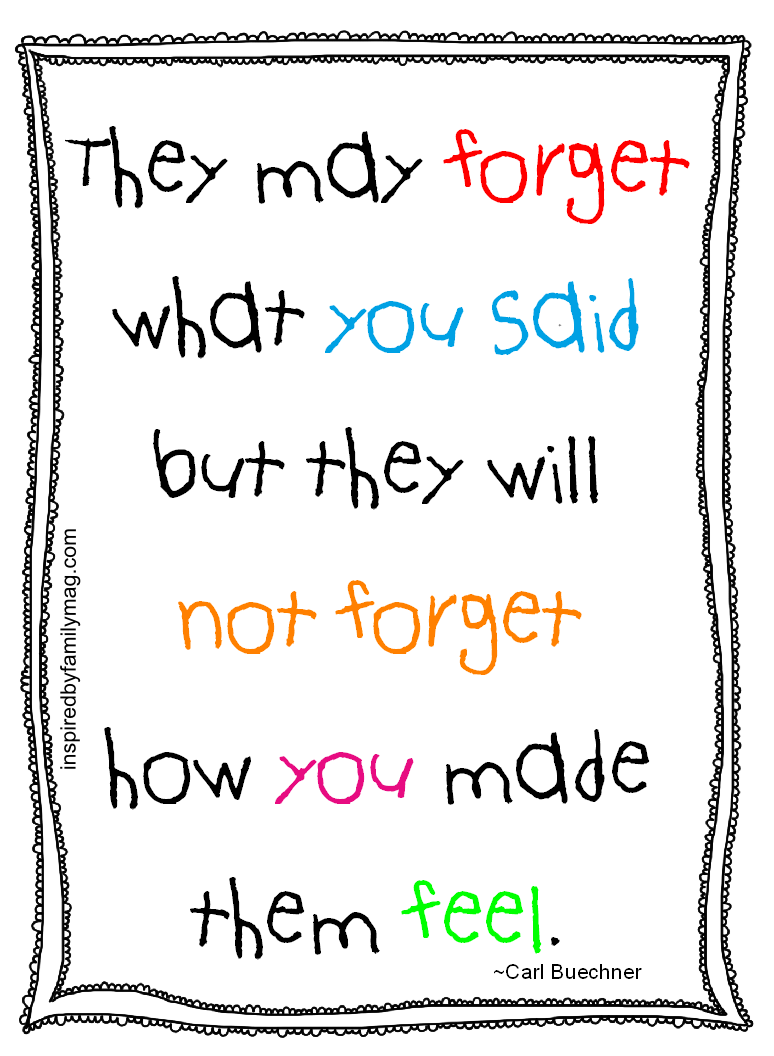
This quote that I saw on Facebook stood out to me, because I’ve seen it to be true as a gymnastics coach myself. Recently, I’ve noticed that I spend a large portion of the class on teaching character. This includes emphasizing good sportsmanship, teamwork, sharing, and manners in addition to the gymnastics curriculum I am expected to teach the gymnasts. To be honest, I find that I have a much stronger relationship with my gymnasts, and this results in more trust. This relationship is KEY. Having a trusting relationship enables me to know the kids in my classes better, which leads to lessons that are tailored to their goals and needs, and to have a trusting relationship with each child. When I am helping young children learn to handstand on a 4 inch wide beam or flip backwards over a bar, trust is necessary. This trust also allows the gymnasts to learn even more gymnastics skills in their time at the gym, since they are able to learn with less feelings of fear. Fear in the gym often comes from fear of failure, fear of getting hurt, fear of not achieving something that their classmates have learned, and fear of judgement from others. The classes are definitely not always perfect, but I would say that the classes run a lot smoother once the class is supportive of one another. When everyone is comfortable in the social environment, the classes have a lot more smiles, laughs and success stories! I realize that it is my responsibility to educate a PERSON, not just an athlete.
How does this relate to literacies in the classroom? This lesson about educating a person is related to multicultural and mental health literacies for both a teacher and students. Multicultural literacy encompasses the fact that there are various cultures, races, genders, ages, and most common in this example, abilities (Hawkins, 2014). A teacher can promote a multicultural culture by being a role model. This includes demonstrating (implicitly and/or explicitly) that not everyone has to be at the same level of ability all the time, and that it is ok. In the gym, I am constantly teaching children that different people master skills at different times, and that any new skill is a reason to celebrate. We celebrate the small things as well as the big things, to promote that everyone is successful in their own way.

 By creating a supportive environment, mental health literacy can become easier to teach. Often, mental health is a touchy subject, and can be hard to talk about for teachers or students. It becomes even harder to have a conversation about mental health if students (or teachers) have the same fears as my gymnasts: fear of failure (to open up about personal situations), fear of getting hurt (bullying after disclosing information), and fear of judgement from others (particularly with stigmas). However, if the teacher is able to form a trusting relationship with their students, the students will be more likely to open and know that they are not alone. Just like my gymnasts trust me to not drop them, students who trust their teacher will feel able to disclose information without fear of a negative experience. If a teacher is able to pass on this trusting relationship to all the students in the class, and create a supportive atmosphere, mental health literacy will become even easier to approach and teach in the classroom, and instances of mental health will likely decrease.


So, in order to be a better teacher, you need to remember that school is not just a place for learning your multiplication tables or where to put commas, but it is also a place to learn how to support others and be a good person. Teachers should remember that they are not just teaching a student, but they are teaching a person with many needs, including a need for safety and security and a sense of belonging, according to Maslow’s hierarchy. When teachers are able to move beyond the curriculum and teach the person, it will become easier to teach the curriculum as well as 21st century literacies. Overall, by teaching students how to be better people, your classroom will become better people, and the overall environment will improve! A better environment leads to better learning!

I challenge you all to give it a try! Try to connect to the one student that you can’t seem to get through to, or take advantage of a ‘teachable moment’ this week and teach students how to respect and support one another. Although positive results will take time, it is not impossible! I would love to hear your stories about how you teach people, not just students.


References:
Hawkins, K. (2014). Teaching for social justice, social responsibility and social inclusion: a

respectful pedagogy for twenty-first century early childhood education. European Early Childhood Education Research Journal, 22(5), 723-738.


Monday, February 22, 2016

How to Begin to Break Down the Barriers


This week I learned about how classroom subjects operate on a spectrum, ranging from distinct disciplines to transdisciplinary projects. Throughout my education, I have been trained to separate tasks into the disciplines, however I thinking outside this box would be something I would love to do in my own classroom. Who says that numbers always have to be math? Relating to my last post, all of my experiences with financial literacy were based on math classed, so I have been taught to associate finances with math. I am sure other people also make similar associations between financial literacy and math, and even with other literacies such as environmental literacy being assumed to be related to science primarily, and mental health literacy being associated with physical education curriculum. I assume that these associations are common since the examples given by my peers often fell into these subjects. However, this isn’t the ONLY way.
In this blog, I will discuss my thinking process about how I would deconstruct this concept of literacies fitting into only one distinct discipline, and give you some examples that I would use in my classroom to teach literacies in an unconventional way!
1.      Choose a 21st century literacy.

2.      Now, choose a subject that you would NEVER think to pair with this literacy.

3.      Find curriculum expectations that you will cover related to your literacy and the subject, and include some of your own expectations!

4.      Use backwards design to come up with a unit. Start with the list of what you want students to know that you wrote in step 3, then determine how each expectations can be assessed, then base your lessons around this assessment and expectations. Refer to the book Interweaving Curriculum and Classroom Assessment: Engaging the 21st-Century Learner (Drake, Reid, & Kolohon,2014) for more information about this. Be as creative as possible!

 These four simple steps are similar to what a teacher would do in a typical classroom with each subject, BUT it takes it one step further because of the creativity and blend of unexpected subjects and literacies. The barriers are beginning to be broken. Next, I will use these steps to show you an example for a Grade 4 class:

1.      Choose a 21st century literacy. = Financial Literacy

2.      Choose a subject that you would NEVER think to pair with this literacy = Health and Physical Education

3.      Expectations:

-          C3. demonstrate the ability to make connections that relate to health and well-being – how their choices and behaviours affect both themselves and others, and how factors in the world around them affect their own and others’ health and well-being.

o   C3.1 identify ways of promoting healthier food choices in a variety of settings and situations

-          Specifically, how the cost of healthy foods can affect healthy eating

-          Choices about organized sports, and how the cost of sports can influence these choices

-          (The first two points are chosen from the curriculum, and the second two I have chosen to connect financial literacy with the curriculum expectations)

4.      The options are endless now! Using these expectations and backwards design, create a unit plan! I will not go into detail here since every classroom has its own needs, interests and resources, but the unit could include…
o   Each student researching the cost of two organized sports they are interested in for one year. (Connection to the curriculum = how factors in the world around them affect their own and others’ health and well-being)
o   A trip to the grocery store where students explore the prices of different health and unhealthy foods, followed by a discussion about what is cheaper and how this would affect the body. (Connection to the curriculum = how factors in the world around them affect their own and others’ health and well-being)
o   A brainstorm activity where students think about ways of promoting healthier food choices in a variety of settings and situations (Curriculum Connection). This video is a great new initiative that may spark interest in the students and promote their own new ideas!
This ‘thinking outside the box’ has many potential benefits! Coming up with the links between the subjects fosters creativity in a teacher. It allows teachers to be more comfortable and confident with their own ideas, and more ideas means more opportunities to tailor lessons to your unique class! Also, students see teachers model creativity, and will be more encouraged to become creative themselves and stretch the limits of their imagination, just like their teacher does. What is the most creative combination you could make between a subject and a literacy? Would you use this in your classroom? Let me know in the comments!


References
Drake, S. M., Reid, J. L. & Kolohon, W. (2014). Interweaving curriculum and assessment: 
Engaging 21st Century Learners. Toronto, ON: Oxford University Press.
Ontario Ministry of Education. (2015). Health and Physical Education: The Ontario Curriculum
Grades 1-8. Queen’s Printer for Ontario.

Sunday, January 10, 2016

Financial Literacy in My Education (EDUC 4P27)

Retrieved from www.experian.com
 
After reading about financial literacy before meeting with my classmates to discuss this literacy, I started reflecting on whether or not I had any components of financial literacy during my own personal education growing up. I can only remember 2 instances where financial literacy. This reflection kept bringing me back to this popular post from the internet.
 
Retrieved from http://9gag.com
 
The fact that it is so popular among social media demonstrates that students wish they had more financial literacy, as they see it as practical. If students received more financial literacy, they may feel more prepared for the real world. The only lessons I remember that taught us to be financially literate are from grade 5 and 6, none of which are in high school where students are closest to being citizens and independent decision makers. In this blog post I will explain the activities I did in school, and also expand upon how I would alter them based on what I have read about financial literacy. I hope that by blogging about these activities, I will remember them and implement them in my classroom in the future, because I did find the lessons educational, relevant, and engaging.

In Grade 5, we did a class project involving raising money and contributing to charity. As a class, we looked through the World Vision Catalogue and decided what we, as a class, wanted to purchase for children in poorer parts of the world. Our teacher guided our decisions by explaining how purchasing a goat, for example, would be beneficial because it would give the families goat milk that they could sell, and that buy buying multiple goats, the people could breed goats, resulting in more goats that they could sell to make more money. I cannot remember exactly what we had decided upon purchasing, but I know we had multiple different things we aimed to purchase. Next, we added up the total money we had to spend, and as a class, we had to raise that money. Our teacher helped us brainstorm ways that we, as children, could still raise money. She did not want us to simply be given money, but rather encouraged us to earn it. My friends and I did chores for family members, shovelled snow, and babysat, to name a few money raising methods. In the end, our class reached the goal and was able to purchase the goods from World Vision. This project took weeks, as the class was involved in the entire process from start to finish.
 
Retrieved from www.worldvision.org
 
I believe that this activity was successful in teaching us financial literacy, as it helped us understand that individuals in our society earn money by working. Meszaros and Hill (2015) discuss that students do not grasp the concept that money is earned, therefore financial literacy education can aid with this lesson, as this grade 5 activity did. The same article suggests that students learn that jobs requiring more skill and education receive more money (Meszaros & Hill, 2015). The activity I explained above did not teach this, however it could have been a follow-up lesson. Introducing concepts of finance early, especially the relationship between work and income, is cited as beneficial for children as the foundations for financial literacy and can be expanded upon throughout the years at school (Meszaros & Hill, 2015). Students younger than grade 5 could be exposed to this concept as well. In addition, this activity cultivated life skills such as cooperation, collaboration, communication between classmates, teamwork, goal-setting, and philanthropy. It was engaging and impactful, since I still remember this activity and I am proud of what my grade 5 class achieved.

The only other specific financial literacy activity I remember from my educational experiences was in grade 6 math. We were given the task to create our dream bedroom. Our teacher had given us a budget (I do not remember the exact number) and we had to find 10 things to purchase for our bedroom using flyers. We had to cut out the items we wanted to purchase and paste them in a notebook. We then had to calculate the price of the item after tax, and at the end, we had to be under our budget.

 
Retrieved from www.teenink.com
 
This activity touched upon different aspects of financial literacy than the previously explained example. The focus of this activity was understanding tax that is applied at checkout, staying in a budget, and the mathematical calculations that are used to do these tasks. This task was extremely relevant, as planning a bedroom is a task that students likely see in their life. To improve this activity, I would talk about the reasons for taxes on products, so students realized that is not just number and so that they understand more of the financial world. In addition, the planning and goal setting (sticking in the budget, in this case) that was seen in both examples, is cited as part of financial literacy learning as students become critical thinkers about their finances (Blue, Grootenboer, Brimble, 2014).

In summary, financial literacy is included in schools, however maybe not to the extent students want it to be. And when it is taught, financial education can be fun, engaging, and long-lasting. These lessons are relevant to students and can be combined with other subjects in order to teach financial literacy in combination with other subjects and life lessons teachers are excepted to teach. Do you have any ways that you were taught financial literacy, good or bad? Will you teach it in your classroom, and how young would you start teaching it? Should it be included in the curriculum? Let me know your thoughts in the comments!


References:

Blue, L., Grootenboer, P., Brimble, M. (2014). Financial literacy education in the curriculum:

Making the grade or missing the mark?. International Review of Economics Education, 16, 51 – 62.

Meszaros B. T., & Hill, A. T. (2015). Work, education, and income: Economics and financial

literacy in the early grades. Social Studies and the Young Learner, 28(1), 12 – 16.


Wednesday, October 28, 2015

A Thank You to the Awesome Teachers!

Take a moment and think about the best teacher you have ever had. What made them so awesome?

My favourite teacher was the Chemistry teacher in had in grades 11 and 12, which is surprising since science was definitely not my favourite subject. However, the teacher truly made the class. He kept us entertained with experiments and Firework Fridays where we got to bring something into class to see if it would explode with a firework in it. He showed us videos, sang songs, danced, jumped on tables, all so that we would better understand and engage in a lesson. I knew, and he knew, that I was not going to continue studying science once I left high schools, but he did everything he could to ensure that everyone was still valued and engaged in the class. This teacher tailored the lessons towards students and their needs, instead of just doing things the traditional way, he went above and beyond to make the class something we enjoyed. As Drake says, the only way that students will find information relevant is if it connects to them personally, which can only happen if the teacher gets to know their students (Drake, 2014).

"The best teachers teach from the heart, not from the book" - Anonymous

The first moment I realized how much he knew about us was one day when I was sitting in class, taking notes from the textbook. No chemicals were used, but I had broken out in an itchy rash, something that had happened before (but not to that extreme) and is not concerning, just uncomfortable. My teacher privately came over to me, and asked if I was alright and if I wanted to go for a walk and grab a drink. The fact that he actually could tell that I was physically uncomfortable, despite the fact that I was desperately trying to hide it in fear of disturbing others or drawing embarrassing attention, showed how in touch he was with his students. He knew us so well as individuals that he could tell when we were having an ‘off’ day, which is a skill I can only hope that I develop.

I admired my teacher for this, but the real reason why I would say he is my favourite teacher is because he TRULY CARED.

In grade 12, I started limping because I physically could not move my foot, and I was waiting to be assessed by doctors. I remember walking into class and my teacher instantly looking concerned, and asking if there was anything I could do and if I should be using crutches. This made me realize that he really wasn’t just concerned about how well we could mix chemicals or count the atoms in elements, but he was worried about everyone as a whole person, not just as a student. After reading some articles about teachers who care for their students, I found that Garza, Alejandro, Blythe, and Fite (2014) agreed with the idea of caring for the whole person, stating that the teachers deemed as caring were the one who knew the children in their class as dynamic people. Obviously, caring is multidimensional, not just limited to academics.

                                               
                                                            (Buechner, n.d.)

The classes I had with this teacher were amazing, fun, and I still remember some of the material from the class, despite it being something I find boring and “not my thing”. The teacher had a major impact on making this class enjoyable. Schwab said that the learners, the teachers, the subject matter, and the milieu (or educational environment) all are interconnected and work together to either form a positive or negative atmosphere (Drake, 2014). This class had the same students and environment as my other classes, and the subject matter was not something I would consider exciting, so clearly it was the teacher that knew how to make it all work.

I found a video on YouTube (watch it here) that I love. It shows people talking about their favourite teacher, and what qualities their teachers possessed that made them so great. These answers start with the teacher being personable, accepting, fun…and then moves on to personal traits such as being caring and loving. I loved how the video mentions that you cannot fake being caring and loving, because kids pick up on it. I can honestly say that my favourite teacher genuinely loved and cared for all his students.

                                 
                                                       (Rather, n.d.)


To conclude, I would like to thank my teacher for being such an amazing teacher, person, and role model for both my personal and professional adventures. In this class, we learned about how teachers need to teach students how to BE, as people. Learning how to be is often learned from watching role models, related to Bandura’s theory (Drake, 2014). As a future teacher, I look to my favourite teacher to be my role model in terms of the teacher I want to be.

References:

Buechner, C. (n.d.). Teaching quotes. Retrieved from www.inspiredbyfamilymag.com

Drake S. M., Reid, J. L., & Kolohon, W. (2014). Interweaving Curriculum and Classroom
Assessment: Engaging the 21st Centure Learner. Don Mills, ON: Oxford University Press. 

Garza, Alejandro, Blythe, & Fite (2014). Caring for students: what teachers have to say. Hindawi
Publishing Corportation, 2014, 1-7.

Rather, D. (n.d.). Quotes about teachers. Retrieved from http://quotesgram.com/dan-rather-quotes-
           about-teachers/

SoulPancake (2013, July 2013). My favorite teacher – man on the street. Retrieved from


Tuesday, October 6, 2015

Art Classes and Creativity in Schools

(Photo retrieved from http://ripstickgirl22.deviantart.com/art/Live-Life-Love-Art-Icon-292086411)

          In a TEDx Talk by Ken Robinson (2006), he states that every place in the world has a hierarchy of important school subjects, and the arts are always on the bottom of this hierarchy. An article by Charlern (2003) mentions how the staff and students at a K-12 school only wished that the arts were seen as important as the athletics.This school made an effort to resolve the inequalities at school and attempted to help students and staff see the value of art by hosting an Arts Week, where they immersed children in all forms of art by displaying it all around the school for that week (Charlern, 2003). I love the idea of this art week, and the results were successful as attitudes towards the arts began to change positively, however, this initiative was only a week. In comparison, athletics seasons generally last several months, and academic subjects are usually taken throughout the entire school year. Therefore, I myself would say that Arts Week should happen every week!

            This year, I started teaching dance to four and five year olds. On the first day, I had the girls play ‘Freeze Dance’ to show me all of their dance moves so that I could base the future lessons off of moves they like. To my surprise, every single one of them danced in their own way, it was so creative, and none of them were afraid to be creative. At the time I was shocked...whenever my dance classes are told to improvise or freestyle, everyone stands around and waits to be told exactly what to do. As older dance students, we are scared to be creative, and scared to be wrong. We have been taught the ‘right’ way to dance, and we don’t take risks to creatively use our skills. Do schools also teach us not to use our creativity?

            From my personal story, there are two perspectives that a person might consider. The first option is that we should allow children to flourish their artistic skills in the classroom. From this, we can conclude that schools should include more art classes so students can practice and excel in creative outlets. However, we could also take a contrary perspective; young students have an abundance of creativity, and once they are put through education programs, whether it be in school or in extracurricular lessons, their creativity diminishes as they begin to be told that there is a right and a wrong. One might assume, because of this, that art should not be taught in schools, and that it should be something that students are not assessed on; it should remain a hobby or extracurricular. From my example you might assume that as we get older, institutions diminish our creativity, so if we keep arts out of our schools, we will always be creative.

            I personally believe the second assumption is false. I think there is a balance; schools can teach arts without forcing a right or a wrong. Arts should be about becoming expressive and creative. In order to succeed in an art class, maybe you don’t have to be the best at drawing or the best singer, but rather as teachers, maybe we should be looking for personal growth in regards to emotional awareness, communication, and creativity and uniqueness.

My favourite part of the TEDx Talk by Ken Robinson (you can watch it here...it is about 20 minutes but it is great!) emphasized the importance of art in schools. He told a story about a dancer at the Royal Ballet. The ballerina told him that in school, her teachers assumed she had a learning disability, such as ADHD, and that she would fail. After seeing a professional, they determined that she was not unable to learn, but rather, she was just a dancer. She just needed to MOVE in order to succeed in learning! It reminded me of something a parent I knew told me. They said they didn’t want their youngest child in a dance class because they loved the way she danced freely around the room with no care in the world, however they said that when their older daughter started dance class, her carefree dancing was replaced with ballet steps and proper technique, with no freedom in her movements. This has shaped the way I teach my little ones…I want to teach them a balance between proper technique and how to incorporate it and balance it into their own freedom of movement (Personal Communications, 2014). Here is one online resource that may have helped this dancer in math class, as it gives examples of how movement and different art forms can be used in other academic classes.

 In this picture, angles are being taught by using the body to turn to the different angles (for example, half turns vs. full turns) (Picture retrieved from https://www.mathandmovement.com/activities.html)

 In this picture, numbers are taught by hopping on the numbers. This mat can be adapted for a number of lessons involving numbers and movement. (Picture retrieved from https://www.mathandmovement.com/activities.html)


I know I focused a lot on dance in this blog, but that is because that is what I am most familiar with. However, I believe that the main points can be applied to ALL forms of art in the classroom. What do you think? Should we have more art education in school or have no art education in schools whatsoever? And how should we assess it? Should we assess it on proper techniques of the art form, or for uniqueness and creativity, or a bit of both? I would love to hear your opinions, especially on other forms of art such as music, drama or visual arts!

References

Actuarial Consulting and Teaching Services (2011). Math & Movement. Ithaca, NY.

Charlern, R. A. (2003). Arts week: A canadian school celebrates the arts. Teaching Music, 11
(2).

Robinson, K. (2006). Do schools kill creativity? [video clip]. TEDx Talk.

Friday, September 18, 2015

Should the 'Hidden Curriculum' stay hidden?


            This past summer, I had the amazing opportunity to volunteer at a children’s center summer camp for children entering grade 1 or 2. Most of these children attended the camp for the whole summer, and they considered the center their second home, since many of them had been coming here for at least half of their life. To keep consistency, the center still ran their camps similar to the school year, although it had a lot less focus on academics and a lot more focus on teaching kids how to be kids. I was surprised about how important it was to teach these skills! These days, many kids are in school for most of the day, and then spend their evenings in ballet, soccer, hockey, gymnastics, piano lessons…and the list goes on and on. With so much of their time occupied in structured activities, they don’t have an opportunity to just be kids. So this summer, the focus shifted to teaching kids social skills. Typically, these are not taught formally in a classroom since the curriculum is already jam-packed with language, math, science, and other academic skills, the social skills that children need for playing on the playground and for socializing with others. So what did we do? This was the kids summer break, so it should be fun! But it also gave an opportunity to teach what is not taught during the school year – specifically learning how to initiate playground games, solve conflict, include others, and most importantly, we taught the kids the ‘golden rule’: Treat others the way you want to be treated!
Photo Retrieved from CreativeCommons and Flikr
            These social skills are generally ‘hidden’ in the curriculum, and children are expected to learn them implicitly without specific instructions; they are expected to simply learn from role models and from experiences around them (Drake, 2014). Because technology is prevalent, and what 6 year old isn’t excited to watch TV? Some of these skills were learned from watching a movie. One specific TV show, called Wimzies House, had the kids absolutely entranced. It just so happened that the week that the center had borrowed a Wimzie’s House DVD on friendship, was the same week when a large number of social problems occurred between the children. You can watch the whole episode here, but in summary, it shows how characters feel if they are being left out of a game, and different ways it could be solved.

            However, as mentioned, that week of camp also had a lot of social issues, so watching a video and hoping that the students soaked in the concept of the golden rule wasn’t enough. The staff ended up having to explicitly explain a variety of social skills. So, in camp, the hidden curriculum became the actual curriculum. The focus was on teaching the kids these social skills explicitly through conversations with the whole class, small groups, or individuals who needed more support in learning and understanding these skills.

Photo Retrieved from CreativeCommons and Flikr
            After several days of explaining these skills to the campers, we did see some improvement! Some kids had better social behaviour within days, others took weeks, but there was definitely improvement. In my placements, I haven’t seen or heard much about social skills lessons. This online book by Shapiro (2004) shows , there is a LOT to teach in terms of social skills. This book itself is 167 pages! These 9 topics don’t come naturally to everyone, and Shapiro has provided basic activities that can be used or adapted to suit the needs of any class (or camp). Scholastic also provides a list of social skills that should be achieved by each grade, but how are all kids expected to know these if they aren’t specifically taught them? What if the ‘watch and learn’ method doesn’t work for a child? Are we letting them fall through the cracks? And, would explicitly teaching social skills prevent situations like this that are absolutely heartbreaking?

References


Drake S. M., Reid, J. L., & Kolohon, W. (2014). Interweaving Curriculum and Classroom Assessment: Engaging the 21st Centure Learner. Don Mills, ON: Oxford University Press. 

Dreisbach, S. (n.d.) Social skills grade by grade. Retrieved from http://www.scholastic.com/parents/resources/article/parent-child/social-skills-grade-grade.

Nathan72389 (2013) Wimzies house you're not my friend. Retrieved from https://www.youtube.com/watch?v=Zof8H5ZH_wE&noredirect=1.

Saborio, B. (2014). Friendship values. Retrieved from https://www.flickr.com/photos/44073224@N04/16107385635/in/photolist-qxmyzr-7em3R9-ij7gyL-7uBthx-APHcY-v2Rc5n-7FCaAs-bNZkax-2djPhx-7TZ9b6-7NZjhX-ebkFWr-dWrKAb-vNhYdg-acS8Zt-dWm7yp-b6p5jX-bvxkYu-uRdwPs-qQ8uW8-4Jxitv-5KEAZs-7KCCtj-aJKUt6-vNEVYt-3BDDye-f6WBPQ-7bNTX9-6AnHRY-6XB8qx-6TDfYX-VTgJG-6GzbA2-nuwNbr-rTHzzS-mcTXAL-9SW2uq-sy8u1J-sy9NiA-sy9Ngm-sQw2MJ-sQw1Zm-sNpfT3-sQvZ4Y-sy8qef-bA5QCQ-bvy2o1-bJsA2T-7TZhp6-7TZfyT.
Shapiro, L. E. (2004). 101 ways to teach children social skills: A ready-to-use, reproducible activity book. Retrieved from http://www.socialskillscentral.com/free/101_Ways_Teach_Children_Social_Skills.pdf.
USA Today (2014). Crying 4-year-old: They don't like me because I'm black. Retrieved from https://www.youtube.com/watch?v=4zeX855EkAk.

WoodleyWonderWorks (2009). Play is good. Retrieved from https://www.flickr.com/photos/wwworks/3502480391/in/photolist-6kv8oX-fNmhhh-4A524c-4A4YMX-4LtvCz-oBu9x5-4YHPLd-7svgys-sByVX-pxMBJz-83HVpT-8VBqT9-2aVhf5-2aVh1m-6GHwZD-btpFXa-8rtV9b-37ofKA-5NY2EU-7iCRcU-e2T59N-4A9fFE-9sgf2f-q63CD6-dxgH8a-9pVTzv-8tU1Gb-7E3U4g-6stQeb-e7veET-nNsNW5-nQrCao-dq8LbQ-3k3Pxp-6bB8S4-62VyBM-7cF33t-2aVfMJ-8PCwt2-nNsmgb-691rMN-fdi92z-7JBgV3-73pQpx-arhPfM-c2bp1j-rxe47K-8qG14e-8E715f-ny2LTf.