Wednesday, October 28, 2015

A Thank You to the Awesome Teachers!

Take a moment and think about the best teacher you have ever had. What made them so awesome?

My favourite teacher was the Chemistry teacher in had in grades 11 and 12, which is surprising since science was definitely not my favourite subject. However, the teacher truly made the class. He kept us entertained with experiments and Firework Fridays where we got to bring something into class to see if it would explode with a firework in it. He showed us videos, sang songs, danced, jumped on tables, all so that we would better understand and engage in a lesson. I knew, and he knew, that I was not going to continue studying science once I left high schools, but he did everything he could to ensure that everyone was still valued and engaged in the class. This teacher tailored the lessons towards students and their needs, instead of just doing things the traditional way, he went above and beyond to make the class something we enjoyed. As Drake says, the only way that students will find information relevant is if it connects to them personally, which can only happen if the teacher gets to know their students (Drake, 2014).

"The best teachers teach from the heart, not from the book" - Anonymous

The first moment I realized how much he knew about us was one day when I was sitting in class, taking notes from the textbook. No chemicals were used, but I had broken out in an itchy rash, something that had happened before (but not to that extreme) and is not concerning, just uncomfortable. My teacher privately came over to me, and asked if I was alright and if I wanted to go for a walk and grab a drink. The fact that he actually could tell that I was physically uncomfortable, despite the fact that I was desperately trying to hide it in fear of disturbing others or drawing embarrassing attention, showed how in touch he was with his students. He knew us so well as individuals that he could tell when we were having an ‘off’ day, which is a skill I can only hope that I develop.

I admired my teacher for this, but the real reason why I would say he is my favourite teacher is because he TRULY CARED.

In grade 12, I started limping because I physically could not move my foot, and I was waiting to be assessed by doctors. I remember walking into class and my teacher instantly looking concerned, and asking if there was anything I could do and if I should be using crutches. This made me realize that he really wasn’t just concerned about how well we could mix chemicals or count the atoms in elements, but he was worried about everyone as a whole person, not just as a student. After reading some articles about teachers who care for their students, I found that Garza, Alejandro, Blythe, and Fite (2014) agreed with the idea of caring for the whole person, stating that the teachers deemed as caring were the one who knew the children in their class as dynamic people. Obviously, caring is multidimensional, not just limited to academics.
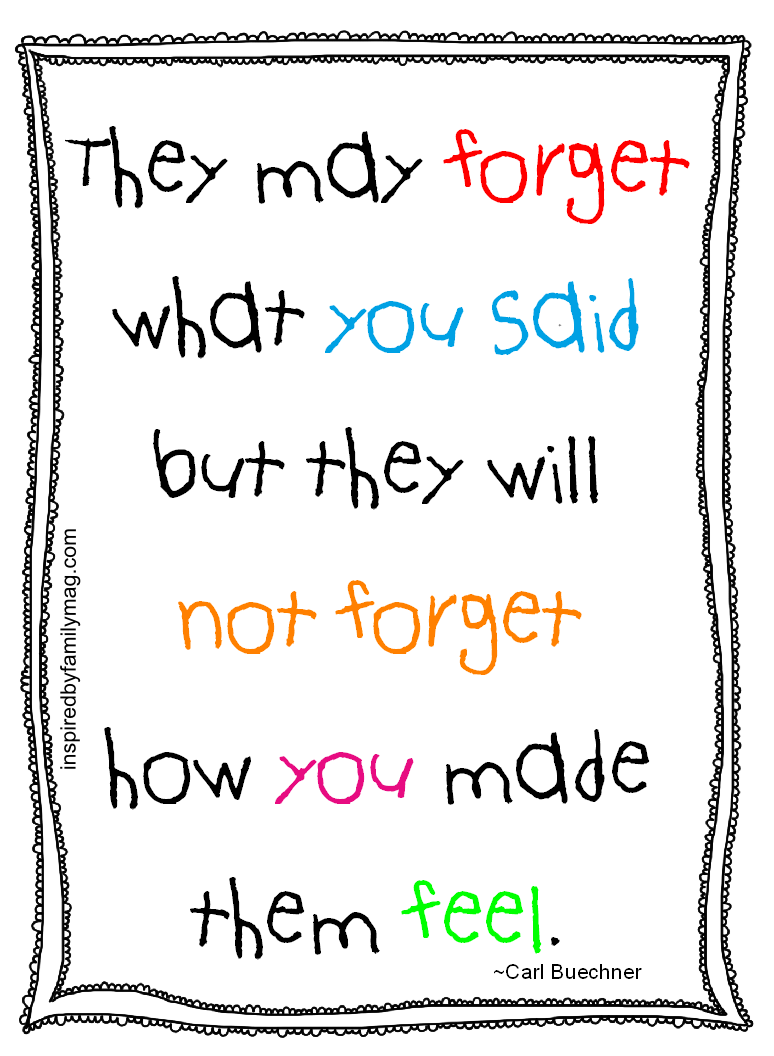
                                               
                                                            (Buechner, n.d.)

The classes I had with this teacher were amazing, fun, and I still remember some of the material from the class, despite it being something I find boring and “not my thing”. The teacher had a major impact on making this class enjoyable. Schwab said that the learners, the teachers, the subject matter, and the milieu (or educational environment) all are interconnected and work together to either form a positive or negative atmosphere (Drake, 2014). This class had the same students and environment as my other classes, and the subject matter was not something I would consider exciting, so clearly it was the teacher that knew how to make it all work.

I found a video on YouTube (watch it here) that I love. It shows people talking about their favourite teacher, and what qualities their teachers possessed that made them so great. These answers start with the teacher being personable, accepting, fun…and then moves on to personal traits such as being caring and loving. I loved how the video mentions that you cannot fake being caring and loving, because kids pick up on it. I can honestly say that my favourite teacher genuinely loved and cared for all his students.

                                 
                                                       (Rather, n.d.)


To conclude, I would like to thank my teacher for being such an amazing teacher, person, and role model for both my personal and professional adventures. In this class, we learned about how teachers need to teach students how to BE, as people. Learning how to be is often learned from watching role models, related to Bandura’s theory (Drake, 2014). As a future teacher, I look to my favourite teacher to be my role model in terms of the teacher I want to be.

References:

Buechner, C. (n.d.). Teaching quotes. Retrieved from www.inspiredbyfamilymag.com

Drake S. M., Reid, J. L., & Kolohon, W. (2014). Interweaving Curriculum and Classroom
Assessment: Engaging the 21st Centure Learner. Don Mills, ON: Oxford University Press. 

Garza, Alejandro, Blythe, & Fite (2014). Caring for students: what teachers have to say. Hindawi
Publishing Corportation, 2014, 1-7.

Rather, D. (n.d.). Quotes about teachers. Retrieved from http://quotesgram.com/dan-rather-quotes-
           about-teachers/

SoulPancake (2013, July 2013). My favorite teacher – man on the street. Retrieved from


Tuesday, October 6, 2015

Art Classes and Creativity in Schools

(Photo retrieved from http://ripstickgirl22.deviantart.com/art/Live-Life-Love-Art-Icon-292086411)

          In a TEDx Talk by Ken Robinson (2006), he states that every place in the world has a hierarchy of important school subjects, and the arts are always on the bottom of this hierarchy. An article by Charlern (2003) mentions how the staff and students at a K-12 school only wished that the arts were seen as important as the athletics.This school made an effort to resolve the inequalities at school and attempted to help students and staff see the value of art by hosting an Arts Week, where they immersed children in all forms of art by displaying it all around the school for that week (Charlern, 2003). I love the idea of this art week, and the results were successful as attitudes towards the arts began to change positively, however, this initiative was only a week. In comparison, athletics seasons generally last several months, and academic subjects are usually taken throughout the entire school year. Therefore, I myself would say that Arts Week should happen every week!

            This year, I started teaching dance to four and five year olds. On the first day, I had the girls play ‘Freeze Dance’ to show me all of their dance moves so that I could base the future lessons off of moves they like. To my surprise, every single one of them danced in their own way, it was so creative, and none of them were afraid to be creative. At the time I was shocked...whenever my dance classes are told to improvise or freestyle, everyone stands around and waits to be told exactly what to do. As older dance students, we are scared to be creative, and scared to be wrong. We have been taught the ‘right’ way to dance, and we don’t take risks to creatively use our skills. Do schools also teach us not to use our creativity?

            From my personal story, there are two perspectives that a person might consider. The first option is that we should allow children to flourish their artistic skills in the classroom. From this, we can conclude that schools should include more art classes so students can practice and excel in creative outlets. However, we could also take a contrary perspective; young students have an abundance of creativity, and once they are put through education programs, whether it be in school or in extracurricular lessons, their creativity diminishes as they begin to be told that there is a right and a wrong. One might assume, because of this, that art should not be taught in schools, and that it should be something that students are not assessed on; it should remain a hobby or extracurricular. From my example you might assume that as we get older, institutions diminish our creativity, so if we keep arts out of our schools, we will always be creative.

            I personally believe the second assumption is false. I think there is a balance; schools can teach arts without forcing a right or a wrong. Arts should be about becoming expressive and creative. In order to succeed in an art class, maybe you don’t have to be the best at drawing or the best singer, but rather as teachers, maybe we should be looking for personal growth in regards to emotional awareness, communication, and creativity and uniqueness.

My favourite part of the TEDx Talk by Ken Robinson (you can watch it here...it is about 20 minutes but it is great!) emphasized the importance of art in schools. He told a story about a dancer at the Royal Ballet. The ballerina told him that in school, her teachers assumed she had a learning disability, such as ADHD, and that she would fail. After seeing a professional, they determined that she was not unable to learn, but rather, she was just a dancer. She just needed to MOVE in order to succeed in learning! It reminded me of something a parent I knew told me. They said they didn’t want their youngest child in a dance class because they loved the way she danced freely around the room with no care in the world, however they said that when their older daughter started dance class, her carefree dancing was replaced with ballet steps and proper technique, with no freedom in her movements. This has shaped the way I teach my little ones…I want to teach them a balance between proper technique and how to incorporate it and balance it into their own freedom of movement (Personal Communications, 2014). Here is one online resource that may have helped this dancer in math class, as it gives examples of how movement and different art forms can be used in other academic classes.

 In this picture, angles are being taught by using the body to turn to the different angles (for example, half turns vs. full turns) (Picture retrieved from https://www.mathandmovement.com/activities.html)

 In this picture, numbers are taught by hopping on the numbers. This mat can be adapted for a number of lessons involving numbers and movement. (Picture retrieved from https://www.mathandmovement.com/activities.html)


I know I focused a lot on dance in this blog, but that is because that is what I am most familiar with. However, I believe that the main points can be applied to ALL forms of art in the classroom. What do you think? Should we have more art education in school or have no art education in schools whatsoever? And how should we assess it? Should we assess it on proper techniques of the art form, or for uniqueness and creativity, or a bit of both? I would love to hear your opinions, especially on other forms of art such as music, drama or visual arts!

References

Actuarial Consulting and Teaching Services (2011). Math & Movement. Ithaca, NY.

Charlern, R. A. (2003). Arts week: A canadian school celebrates the arts. Teaching Music, 11
(2).

Robinson, K. (2006). Do schools kill creativity? [video clip]. TEDx Talk.

Friday, September 18, 2015

Should the 'Hidden Curriculum' stay hidden?


            This past summer, I had the amazing opportunity to volunteer at a children’s center summer camp for children entering grade 1 or 2. Most of these children attended the camp for the whole summer, and they considered the center their second home, since many of them had been coming here for at least half of their life. To keep consistency, the center still ran their camps similar to the school year, although it had a lot less focus on academics and a lot more focus on teaching kids how to be kids. I was surprised about how important it was to teach these skills! These days, many kids are in school for most of the day, and then spend their evenings in ballet, soccer, hockey, gymnastics, piano lessons…and the list goes on and on. With so much of their time occupied in structured activities, they don’t have an opportunity to just be kids. So this summer, the focus shifted to teaching kids social skills. Typically, these are not taught formally in a classroom since the curriculum is already jam-packed with language, math, science, and other academic skills, the social skills that children need for playing on the playground and for socializing with others. So what did we do? This was the kids summer break, so it should be fun! But it also gave an opportunity to teach what is not taught during the school year – specifically learning how to initiate playground games, solve conflict, include others, and most importantly, we taught the kids the ‘golden rule’: Treat others the way you want to be treated!
Photo Retrieved from CreativeCommons and Flikr
            These social skills are generally ‘hidden’ in the curriculum, and children are expected to learn them implicitly without specific instructions; they are expected to simply learn from role models and from experiences around them (Drake, 2014). Because technology is prevalent, and what 6 year old isn’t excited to watch TV? Some of these skills were learned from watching a movie. One specific TV show, called Wimzies House, had the kids absolutely entranced. It just so happened that the week that the center had borrowed a Wimzie’s House DVD on friendship, was the same week when a large number of social problems occurred between the children. You can watch the whole episode here, but in summary, it shows how characters feel if they are being left out of a game, and different ways it could be solved.

            However, as mentioned, that week of camp also had a lot of social issues, so watching a video and hoping that the students soaked in the concept of the golden rule wasn’t enough. The staff ended up having to explicitly explain a variety of social skills. So, in camp, the hidden curriculum became the actual curriculum. The focus was on teaching the kids these social skills explicitly through conversations with the whole class, small groups, or individuals who needed more support in learning and understanding these skills.

Photo Retrieved from CreativeCommons and Flikr
            After several days of explaining these skills to the campers, we did see some improvement! Some kids had better social behaviour within days, others took weeks, but there was definitely improvement. In my placements, I haven’t seen or heard much about social skills lessons. This online book by Shapiro (2004) shows , there is a LOT to teach in terms of social skills. This book itself is 167 pages! These 9 topics don’t come naturally to everyone, and Shapiro has provided basic activities that can be used or adapted to suit the needs of any class (or camp). Scholastic also provides a list of social skills that should be achieved by each grade, but how are all kids expected to know these if they aren’t specifically taught them? What if the ‘watch and learn’ method doesn’t work for a child? Are we letting them fall through the cracks? And, would explicitly teaching social skills prevent situations like this that are absolutely heartbreaking?

References


Drake S. M., Reid, J. L., & Kolohon, W. (2014). Interweaving Curriculum and Classroom Assessment: Engaging the 21st Centure Learner. Don Mills, ON: Oxford University Press. 

Dreisbach, S. (n.d.) Social skills grade by grade. Retrieved from http://www.scholastic.com/parents/resources/article/parent-child/social-skills-grade-grade.

Nathan72389 (2013) Wimzies house you're not my friend. Retrieved from https://www.youtube.com/watch?v=Zof8H5ZH_wE&noredirect=1.

Saborio, B. (2014). Friendship values. Retrieved from https://www.flickr.com/photos/44073224@N04/16107385635/in/photolist-qxmyzr-7em3R9-ij7gyL-7uBthx-APHcY-v2Rc5n-7FCaAs-bNZkax-2djPhx-7TZ9b6-7NZjhX-ebkFWr-dWrKAb-vNhYdg-acS8Zt-dWm7yp-b6p5jX-bvxkYu-uRdwPs-qQ8uW8-4Jxitv-5KEAZs-7KCCtj-aJKUt6-vNEVYt-3BDDye-f6WBPQ-7bNTX9-6AnHRY-6XB8qx-6TDfYX-VTgJG-6GzbA2-nuwNbr-rTHzzS-mcTXAL-9SW2uq-sy8u1J-sy9NiA-sy9Ngm-sQw2MJ-sQw1Zm-sNpfT3-sQvZ4Y-sy8qef-bA5QCQ-bvy2o1-bJsA2T-7TZhp6-7TZfyT.
Shapiro, L. E. (2004). 101 ways to teach children social skills: A ready-to-use, reproducible activity book. Retrieved from http://www.socialskillscentral.com/free/101_Ways_Teach_Children_Social_Skills.pdf.
USA Today (2014). Crying 4-year-old: They don't like me because I'm black. Retrieved from https://www.youtube.com/watch?v=4zeX855EkAk.

WoodleyWonderWorks (2009). Play is good. Retrieved from https://www.flickr.com/photos/wwworks/3502480391/in/photolist-6kv8oX-fNmhhh-4A524c-4A4YMX-4LtvCz-oBu9x5-4YHPLd-7svgys-sByVX-pxMBJz-83HVpT-8VBqT9-2aVhf5-2aVh1m-6GHwZD-btpFXa-8rtV9b-37ofKA-5NY2EU-7iCRcU-e2T59N-4A9fFE-9sgf2f-q63CD6-dxgH8a-9pVTzv-8tU1Gb-7E3U4g-6stQeb-e7veET-nNsNW5-nQrCao-dq8LbQ-3k3Pxp-6bB8S4-62VyBM-7cF33t-2aVfMJ-8PCwt2-nNsmgb-691rMN-fdi92z-7JBgV3-73pQpx-arhPfM-c2bp1j-rxe47K-8qG14e-8E715f-ny2LTf.